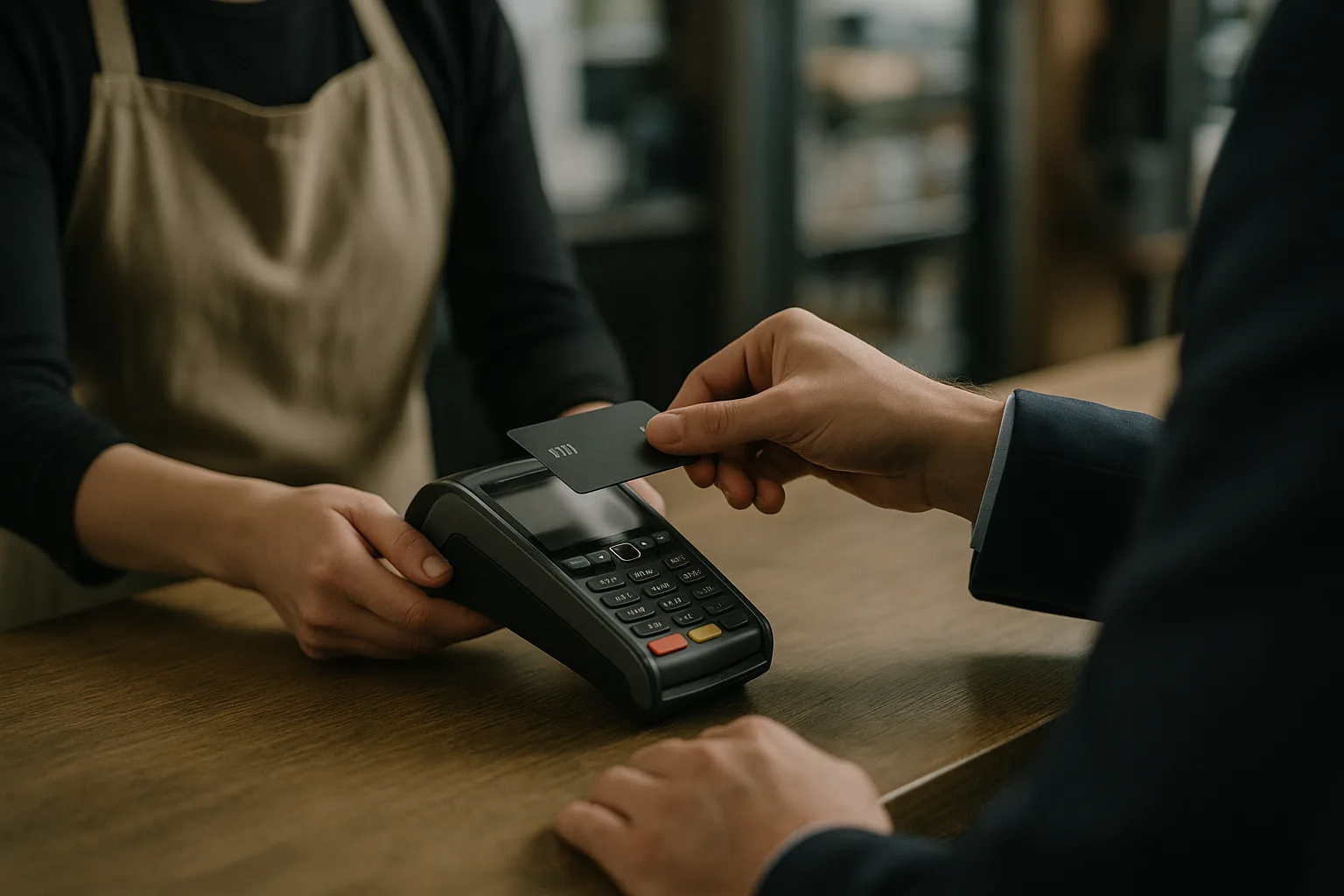
The pitch for tap-to-pay-on-phone - the merchant accepts a contactless card or wallet directly on their iPhone or Android device, no dongle, no reader - has been clear since Apple opened the capability in 2022 and Android followed broadly through 2023 and 2024. Four years in, the more interesting question isn't whether it works. It works. The question is which merchants have actually adopted it, what they're paying, and whether the category has matured past the "for the food truck and the farmer's market" framing into something mid-market operators care about.
The short read in early 2026: adoption is broader than the skeptics expected, narrower than the platform marketing suggests, and the fee structure is still genuinely unsettled.
Where it landed first, and stuck
The category where tap-to-pay-on-phone has clearly won is the long tail of micro-merchants and sole proprietors who previously either ran on a Square dongle or didn't accept cards at all. The friction reduction is real: no hardware to forget, no hardware to charge, no hardware to lose. Square, Stripe, and the bank-led offerings (Chase, Adyen, Worldpay's tap-on-phone product) have all made the onboarding flow tractable enough that a new merchant can be accepting a tap inside of an hour.
The categories where we see it most:
- Mobile services - home cleaning, repair, beauty professionals operating out of homes or rentals, dog grooming, mobile detailing. The merchant is at the customer's location, the alternative was a clunky dongle or an invoice link, and the close rate at point-of-service is materially better with a tap.
- Pop-up and event retail - market stalls, fairs, festivals. The category was already a Square stronghold; tap-to-pay-on-phone has further reduced setup time.
- Restaurants doing tableside payments - particularly independent operators. The check-back step that used to require a portable terminal can now run on the server's own device or a shared house phone.
Where mid-market is still cautious, and why
The mid-market story is more nuanced and the platform marketing has been less honest about it. Tap-to-pay-on-phone is not a wholesale replacement for a managed terminal estate at a 200-store chain. The reasons are operational rather than technical.
First, device management. A chain that wants to deploy tap-to-pay-on-phone across staff devices has to think about MDM, lost-device protocols, employee personal-device boundaries, and PCI scoping in a way that a $50 dedicated reader sidesteps cleanly. Several mid-market operators we spoke to have piloted it for line-busting or backup use cases - peak Saturday, the third reader at the secondary register, the holiday pop-up inside the main store - without committing to it as primary. That's a reasonable place for the technology in 2026.
Second, fee structure. This is the unsettled part. The early platform pricing - Stripe and Square in particular - was set as a slight premium to their card-present rates, on the theory that tap-to-pay-on-phone substituted for a card-present reader transaction. That pricing has held for the small-merchant SaaS-style flat-rate market, where merchants are price-takers. The interchange-plus market for larger merchants is messier. Some acquirers have priced tap-on-phone as card-present, some as card-not-present-with-attestation, and the network rules around how the transaction is flagged for interchange purposes have been revised at least twice since 2023. A payments lead at a mid-market specialty retailer told us their interchange line item on tap-on-phone volume was "a moving target" through 2024 and only stabilized in mid-2025.
Third, hardware isn't actually that expensive. The case for tap-to-pay-on-phone at a chain that already has terminal infrastructure is not "save on hardware." It's "add optionality in flows where a terminal is friction." That's a real but bounded benefit.
The fee picture in 2026
For small merchants on flat-rate platform pricing, tap-to-pay-on-phone typically runs 2.6-2.9% plus a fixed fee per transaction, broadly in line with card-present rates on the same platforms. For interchange-plus merchants, the picture varies, but most have landed in 2026 with tap-on-phone being treated as card-present for interchange categorization purposes when the transaction meets the network's attestation requirements (genuine contactless, in-person, device attested). When it doesn't meet those requirements, it drops to card-not-present interchange, which is materially more expensive.
The platform fees - what Apple takes, what Google takes, what the network takes on top - have been the topic of regulatory interest in both the EU and the US. Apple's opening of NFC access in the EU under the Digital Markets Act has, in practice, mattered more for issuer wallets than for merchant acceptance, but it has created room for competing tap-on-phone offerings that aren't sitting on the Apple platform fee. That competition has started to push platform-side economics in the merchant's favor, modestly.
What it actually changes for retail operators
The honest framing in 2026: tap-to-pay-on-phone is now a standard tool in the payments stack, not a category-defining shift. For a retail operator, the practical questions are narrower than the marketing suggests:
- Do you have flows - line-busting, tableside, mobile staff, pop-ups - where a terminal is friction and a phone isn't? Pilot it there.
- Are you about to refresh terminal hardware on a 5-7 year cycle? Run the math on a hybrid estate before committing to a full reader refresh.
- Are you a true micro-merchant or a sole proprietor? It's almost certainly the right primary acceptance method now.
The mistake to avoid is treating it as a strategic decision rather than a tactical one. It's a tool. The merchants getting value from it in 2026 are the ones who deployed it for specific flows, measured the conversion and throughput impact, and moved on. The merchants still in evaluation purgatory four years in are mostly there because they framed it as a transformation rather than a feature.